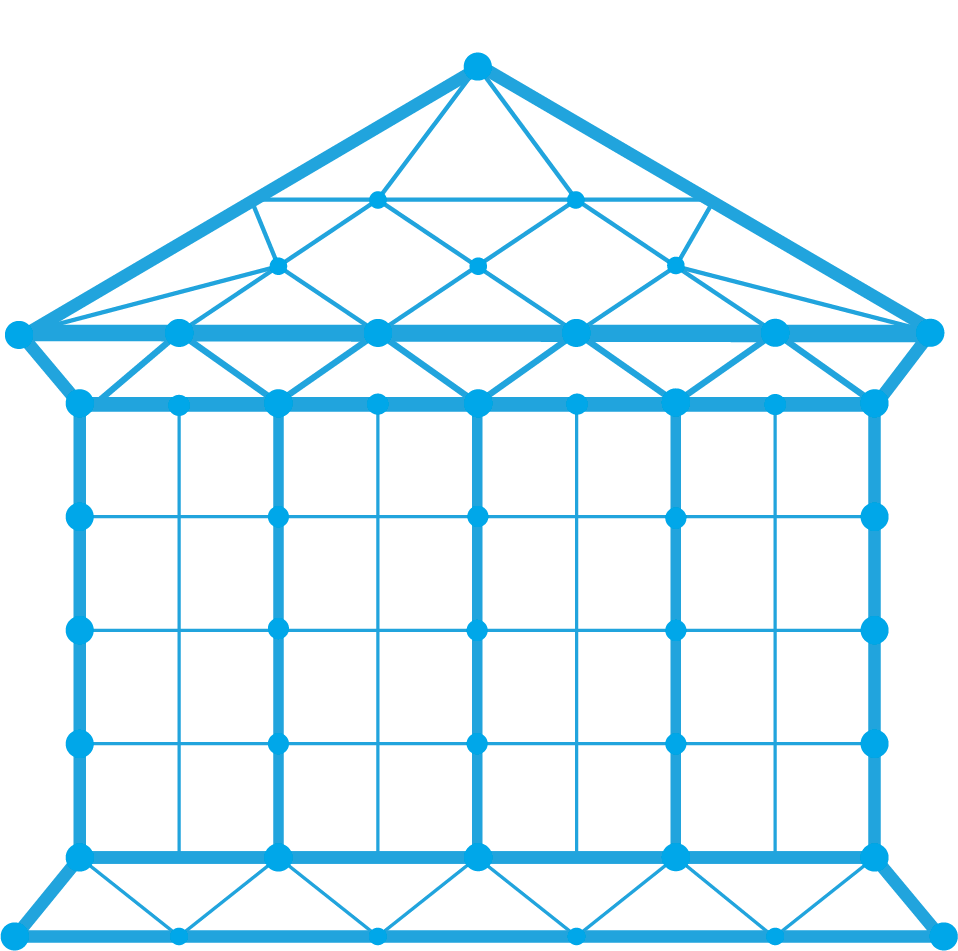

The fastest way to stall a voice AI project is to try to launch every department at once. Big-bang go-lives need every knowledge base perfect on the same day, which means nothing ships. The jurisdictions that reach real coverage do the opposite. They start with one entry point and grow an interconnected web of phone agents over time.
That growth path is not just a rollout tactic. It is the structure we recommend and deploy.
Pick one starting point: the main line or one busy department
There are two good places to start, and only two.
Start at the main line, the front door every call hits first. It answers general questions, gives hours and locations, and routes everything it cannot resolve. Or start with a single high-volume department that is drowning, often Animal Services, Utilities, or Permitting. Either one is a clean, bounded first win that proves deflection in weeks. What you do not do is start everywhere.
From that first agent, you expand by adding specialist agents on top, each wired into the others so context follows the caller from one to the next. One entry point becomes a network. That is the architecture: interconnected agents, added over time, not a pile of separate bots. (See context sharing and one number, every department.)
Weeks 1 to 3: stand up the first agent
Whether the first agent is the main line or a single department, the moves are the same. It answers, it gives the basics, it routes what it cannot handle, and it hands you a clean baseline deflection number to improve on.
Pick the language coverage you actually need on day one. Sumter runs English and Spanish. Do not let a debate about a tenth language delay the nine in ten callers you can serve now.
Weeks 3 to 6: add the next agent, wired to the first
Now add the second agent and connect it. If you started at the main line, the second agent is your highest-volume department. If you started with a department, the second is often the main line that ties everything together. Either way, wire the handoff and prove that context survives the transfer between them. This is the moment the deployment stops being one bot and becomes a network.
Weeks 6 to 12: grow the web, an agent every week or two
Now it is a rhythm, not a project. Each new agent reuses the same plumbing and plugs into the same interconnected web, so a department that used to be a quarter-long integration becomes a two-week configuration. Sumter grew this way until the main line, Animal Services, Building, Veterans, Fire, and the Community Responder line were all live and sharing context.
Why this structure wins
Three reasons. You get deflection in week three instead of month nine. Each new department sees a working, connected neighbor before it is asked to trust the system, which kills internal resistance faster than any slide. And because the agents are interconnected from the first handoff, adding the sixth is as easy as adding the second.
By the end, the jurisdiction is handling a majority of its calls without staff. Sumter sits at 72 percent of roughly 12,000 monthly calls. It did not get there with a moonshot. It got there one connected agent at a time.
For the architecture behind the sequence, see one number, every department. To map your own rollout, book a demo.


