
Chapter 011810
A township in the woods.
Long before there was a city, there was Wayne Township, established in 1810 in the rolling country northeast of Dayton, and for a century and a half it stayed quiet farmland.
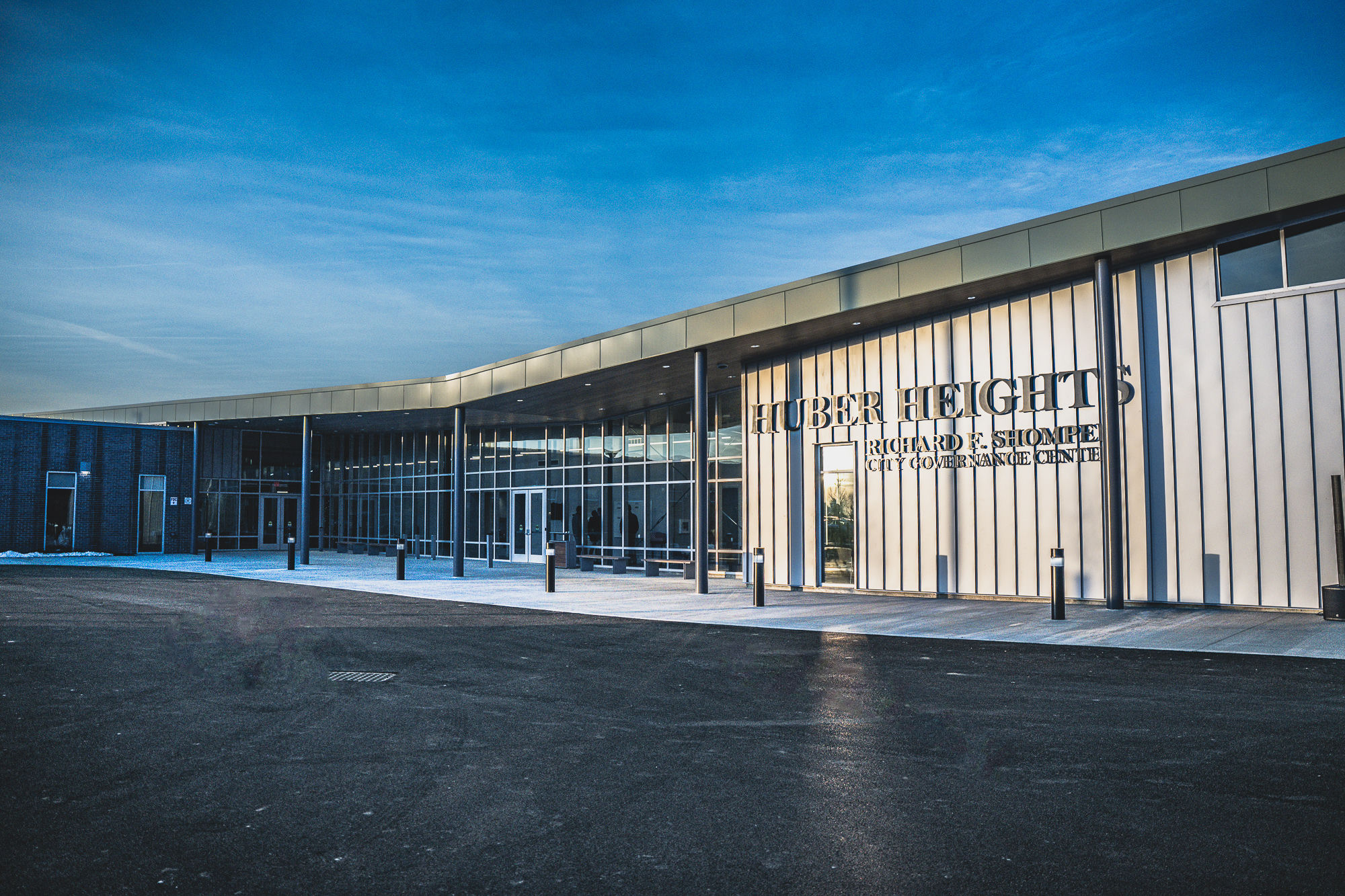
How a city built from over 10,700 brick homes is now answering calls across every department, 24/7, multilingual, with EffiGov.
or skip straight to the results ↓The Story
Jump to a chapter
Long before there was a city, there was Wayne Township, established in 1810 in the rolling country northeast of Dayton, and for a century and a half it stayed quiet farmland.
In 1956, builder Charles H. Huber began covering that farmland with solid brick homes working families could afford, more than 10,700 of them by 1992, earning the city its enduring tagline: “America's Largest Community of Brick Homes.”
In 1981, Wayne Township was incorporated as the City of Huber Heights, and by the 2020s it was home to 43,000 residents, growing fast and still proud of their bricks.
A day of calls in Huber Heights sounds like a city living its life: a chair set out for bulk pickup, a box truck blocking a sidewalk, a storm branch down on Taylorsville Road, a shelter to book at Thomas Cloud Park. Like every city in America, it fielded all of it with finite staff.
And the phone system, like the ones most cities still run, gave no insight into what those calls were about: what residents needed, or what kept coming up.
So in late 2025, Huber Heights partnered with EffiGov to build a phone agent system for every department in the city, answering routine calls itself and routing the hard ones to staff.
Pilot to fleet
Three agents live within weeks, a fourth by December, and the last two by spring, with no new procurement.
Weeks after signing, EffiGov was live for the first three departments: Parks & Rec, Public Works, and City Hall. Zoning joined in December, and the last two, Clerk of Council and Engineering, came online in the spring, with no additional procurement.
Across March through June the six agents took more than 6,600 calls, roughly three in four handled without falling back to the front desk. And many were calls that used to be two: a resident calls City Hall, mentions a zoning question, and is handed straight to the dedicated Zoning agent mid-sentence, no second call, no callback.
Live in Huber Heights
Each department has its own agent, wired to the others so a call can move between them without the resident starting over. Tap one to hear a real call.
Zoning · Report geoverified, routed to the officertap to play the call
Our residents deserve responsive service no matter when they call. EffiGov helps us deliver that while freeing our team to focus on issues that require human judgment and local knowledge.


Day-to-day operator
Admin Assistant, City Manager’s Office
They feel like an extension of our team. I flag something, it gets fixed, and we move on. That’s how it should work.
Four-month snapshot
June was the system’s biggest month yet, and through all of the growth the agents kept handling about three in four calls without a human ever picking up.
March 2026
31 days
calls · 46 / day
April 2026
30 days
calls · 57 / day
May 2026
31 days
calls · 54 / day
June 2026
30 days
calls · 60 / day
In June the agents took 1,808 calls, their busiest month yet, and when a question crossed departments, the caller was handed straight to the right specialist instead of dialing a second time.
Over the four months that’s more than 4,600 calls staff never had to pick up: at a few minutes each, over 230 hours of front-desk phone time handed back to the city.
Handled = the agent resolved the call itself or routed the caller to the right specialist on the first try. Falling back to the front desk doesn’t count. June’s record volume came with two departments newly online from the spring; through the growth, the handle rate held within two points.
From the team
“Each iteration is a better version of itself. The more we train it, the better it gets, and the team has noticed.”

calls answered while City Hall was closed: evenings, nights, and weekends, in the system’s first eight months.
Every call is scanned automatically. The moment a gap surfaces (a missing transfer, a question the agent couldn’t answer), EffiGov’s web agents track down the fix wherever it lives, even a four-year-old PDF. Rachael just approves it, in two clicks.
The gaps used to be Rachael’s to catch. Now they surface on their own. She just approves the fix.
Impact
We work alongside city staff to build voice AI that fits the way your departments actually operate. Same workflow, same systems. Just answered every time.